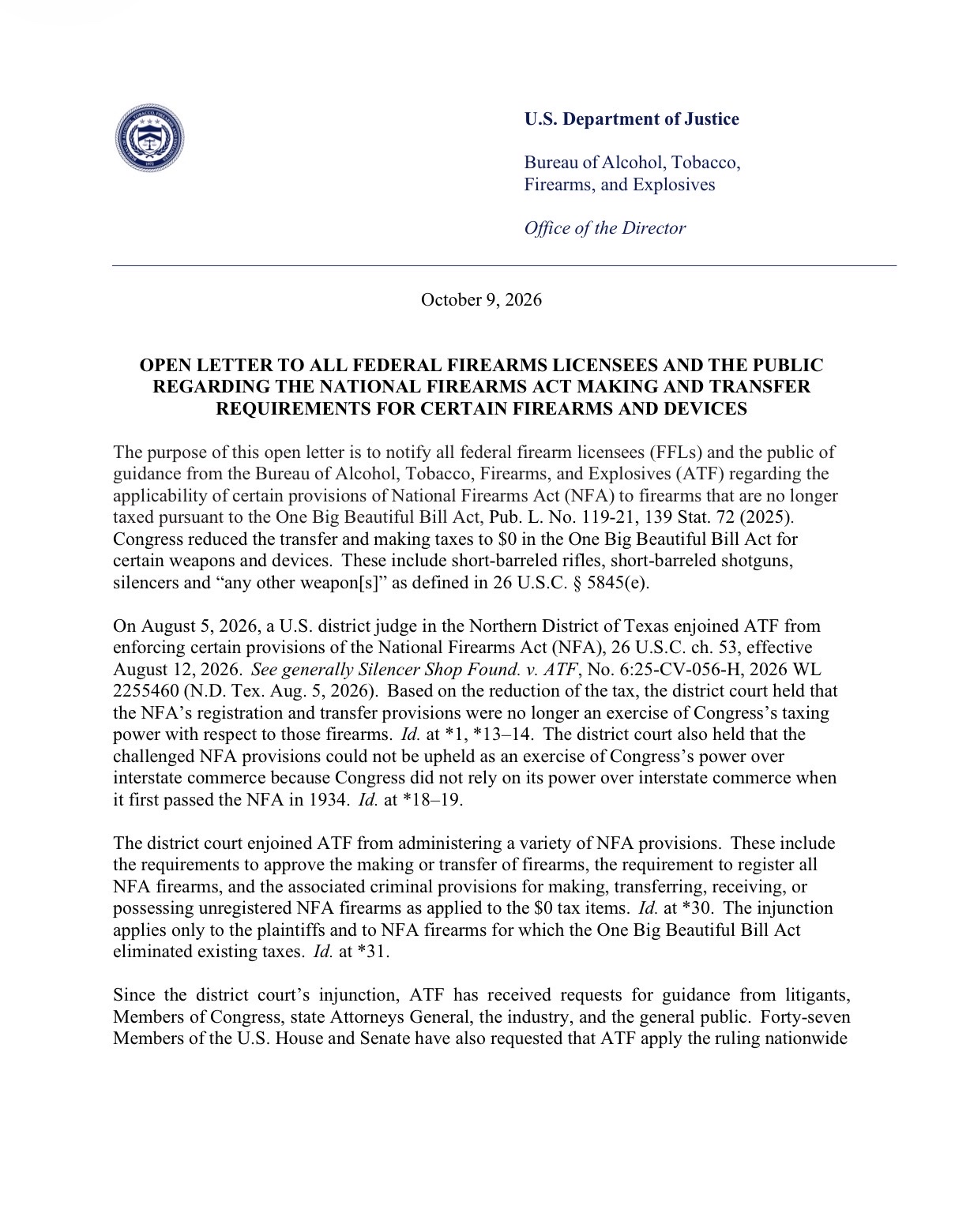
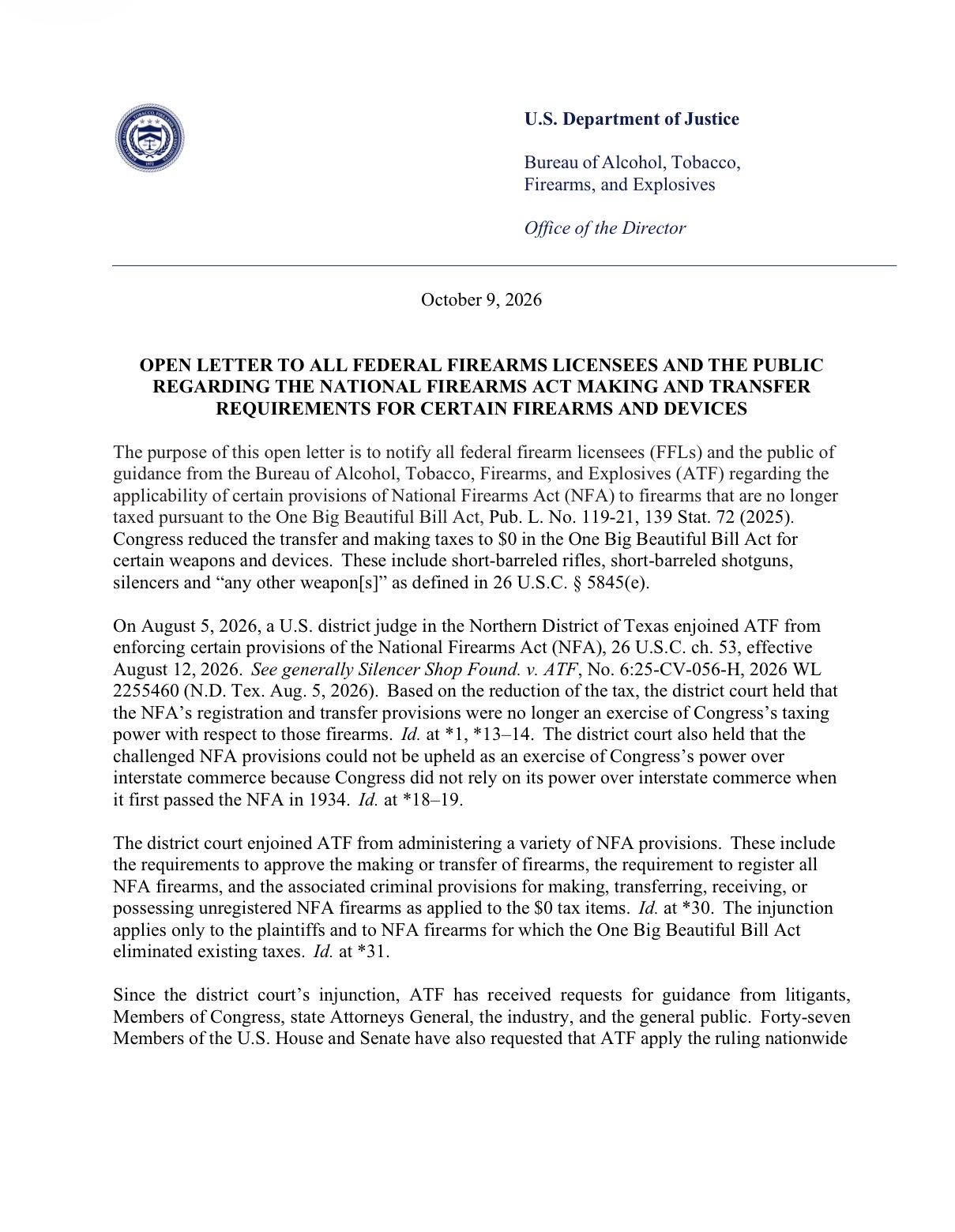
A major victory for Second Amendment supporters was announced Friday, October 9, when the Bureau of Alcohol, Tobacco, Firearms and Explosives (ATF) officially ended enforcement of several federal registration and approval requirements under the National Firearms Act.
The change affects millions of American gun owners and represents one of the most significant shifts in federal firearms enforcement in decades.
WHAT EXACTLY CHANGED?
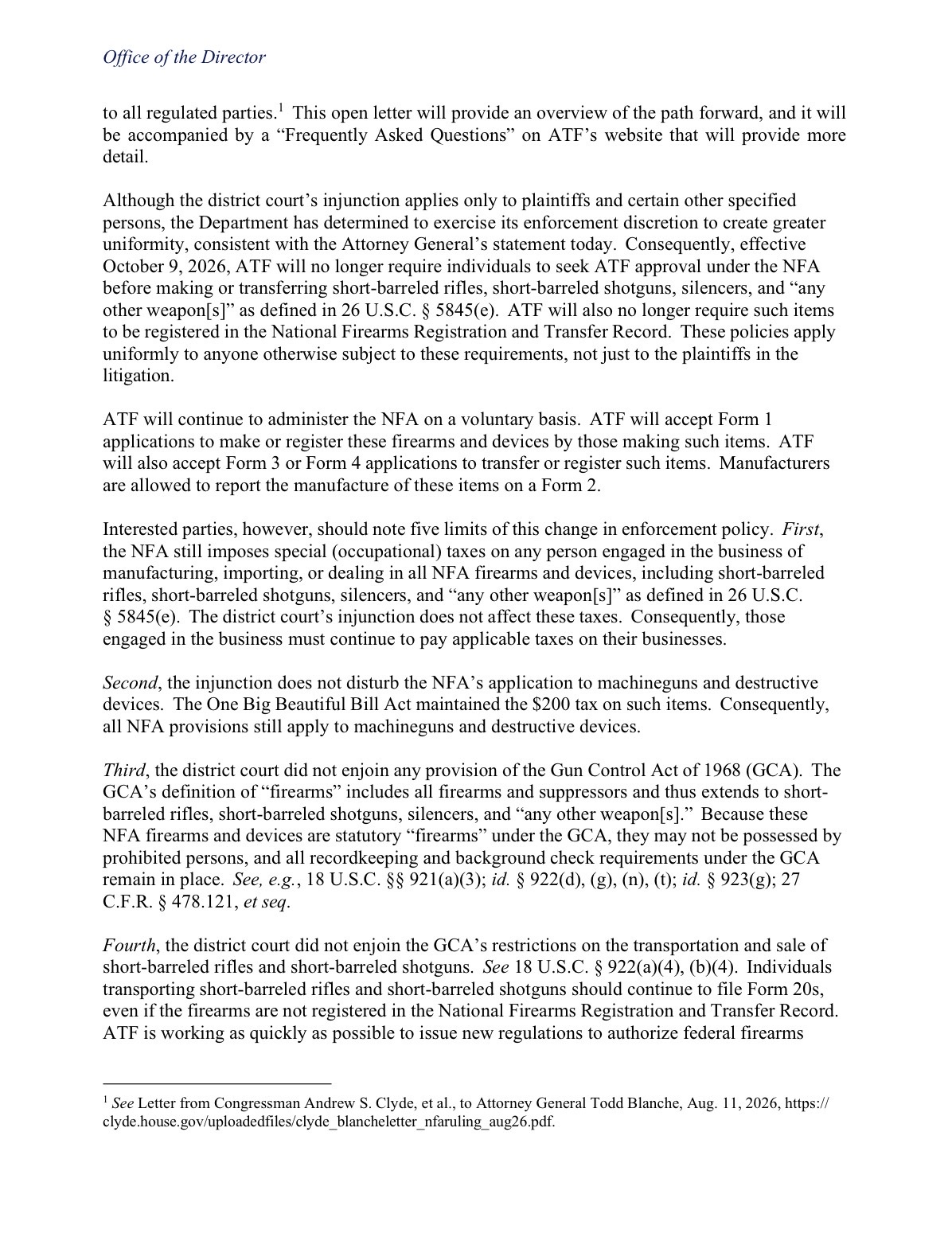
Effective October 9, the ATF will no longer require federal approval or registration under the National Firearms Act for the following:
* Short barreled rifles (SBRs), including rifles with barrels shorter than 16 inches.
* Short barreled shotguns (SBSs).
* Firearm suppressors and silencers.
* Certain firearms classified as Any Other Weapons (AOWs).
Previously, these items generally required ATF registration and approval before they could legally be made or transferred.
Under the new policy, ATF Forms 1 and 4 are voluntary for qualifying firearms. Gun owners may still register their firearms if they choose.
The announcement follows an August 5 federal court decision in Silencer Shop Foundation v. ATF, which challenged federal registration requirements after Congress eliminated the $200 making and transfer taxes for these items.
DOES THIS MEAN THERE ARE NO MORE RULES?
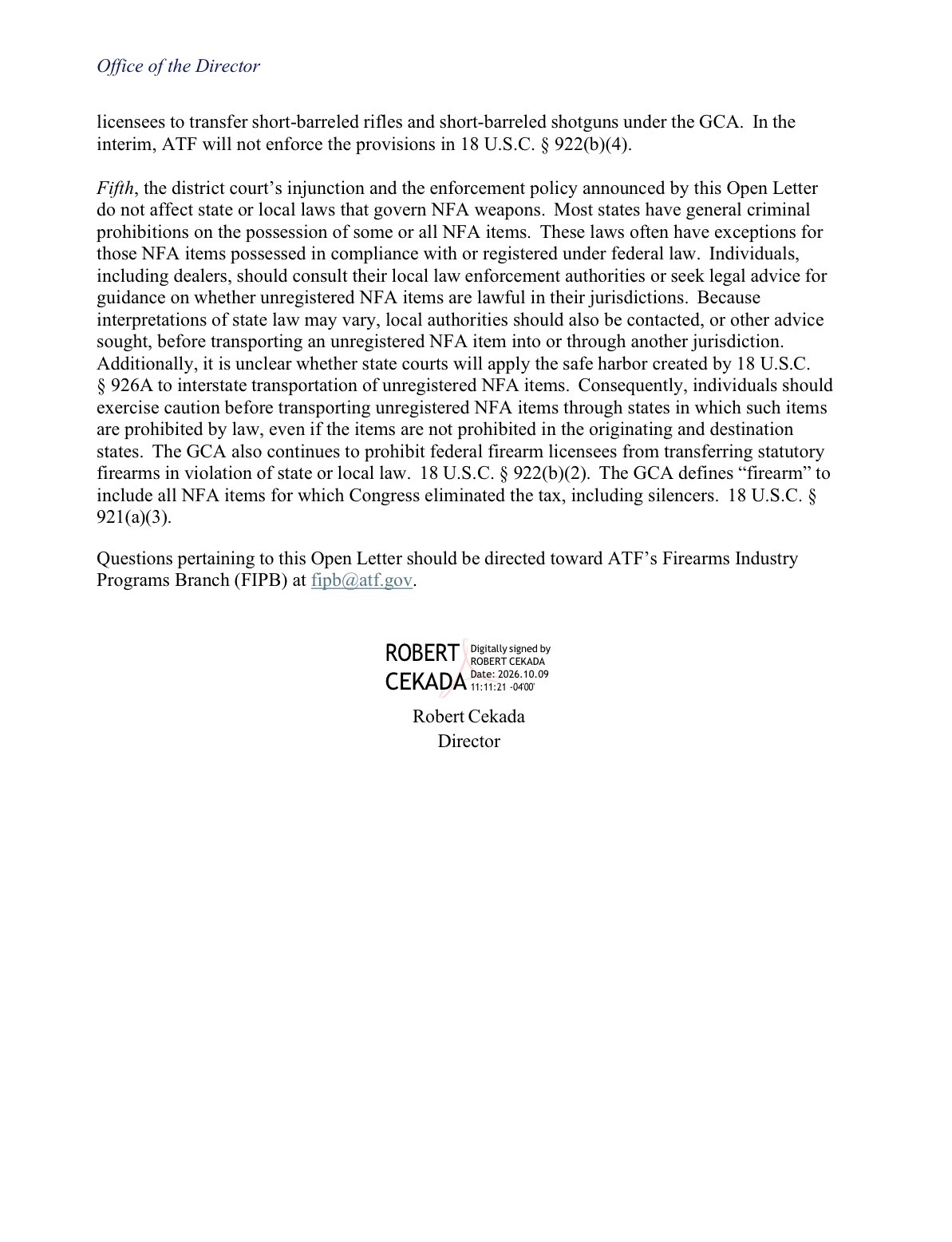
No. Federal background checks, dealer paperwork, and other restrictions under the Gun Control Act remain in effect.
Licensed dealers must still complete Form 4473 and conduct required background checks. Interstate transportation of short barreled rifles and shotguns still requires ATF Form 20.
Machine guns and destructive devices are not included in the change.
WHAT DOES THIS MEAN FOR LOUISIANA?
Louisiana does not require general firearm registration. Residents purchasing ordinary handguns, rifles, and shotguns do not have to register those firearms with the state.
In 2013, Louisiana lawmakers repealed several state registration provisions governing specially regulated firearms.
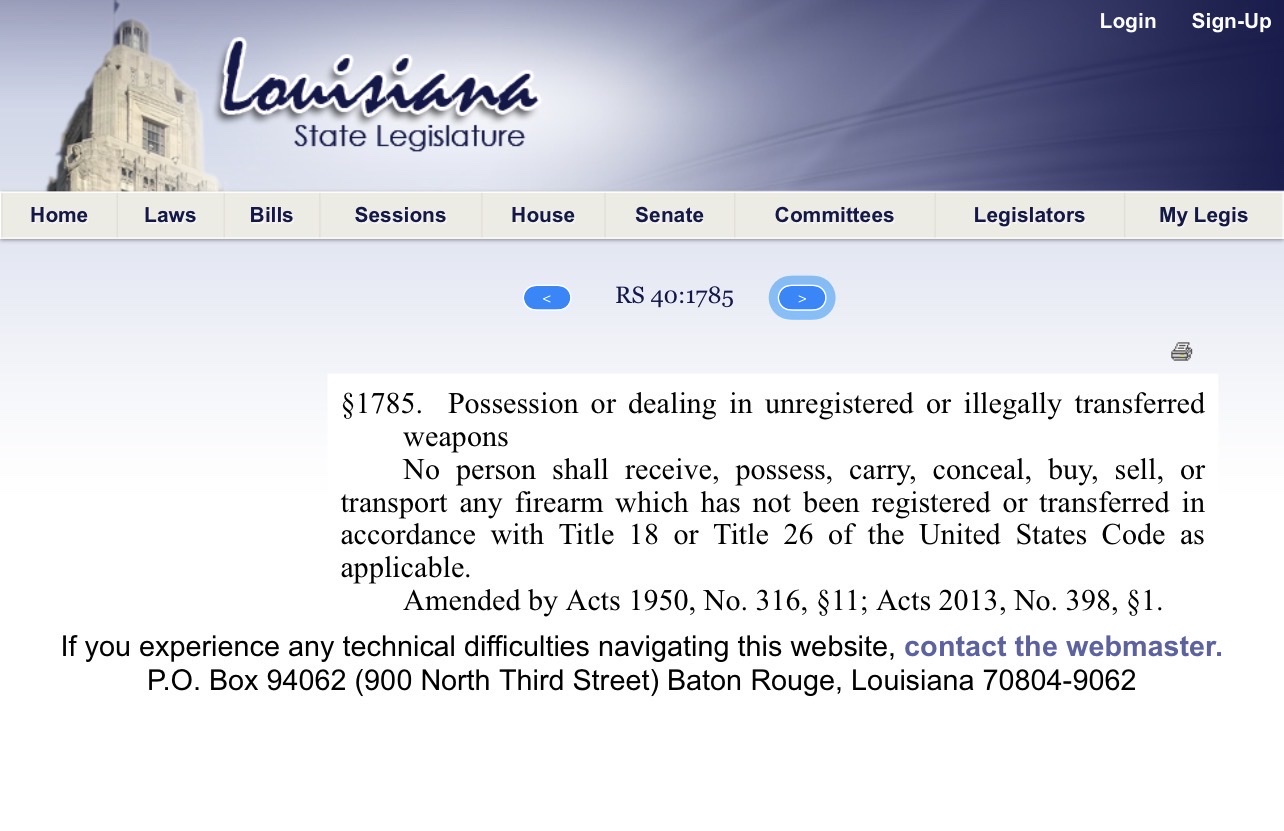
However, Louisiana Revised Statute 40:1785 remains on the books. That statute requires certain federally regulated firearms, including suppressors and short barreled rifles, to be registered or transferred in accordance with applicable federal law.
Because the ATF has stopped enforcing federal registration requirements rather than Congress repealing them, questions remain about how Louisiana’s existing statute applies to newly unregistered firearms.
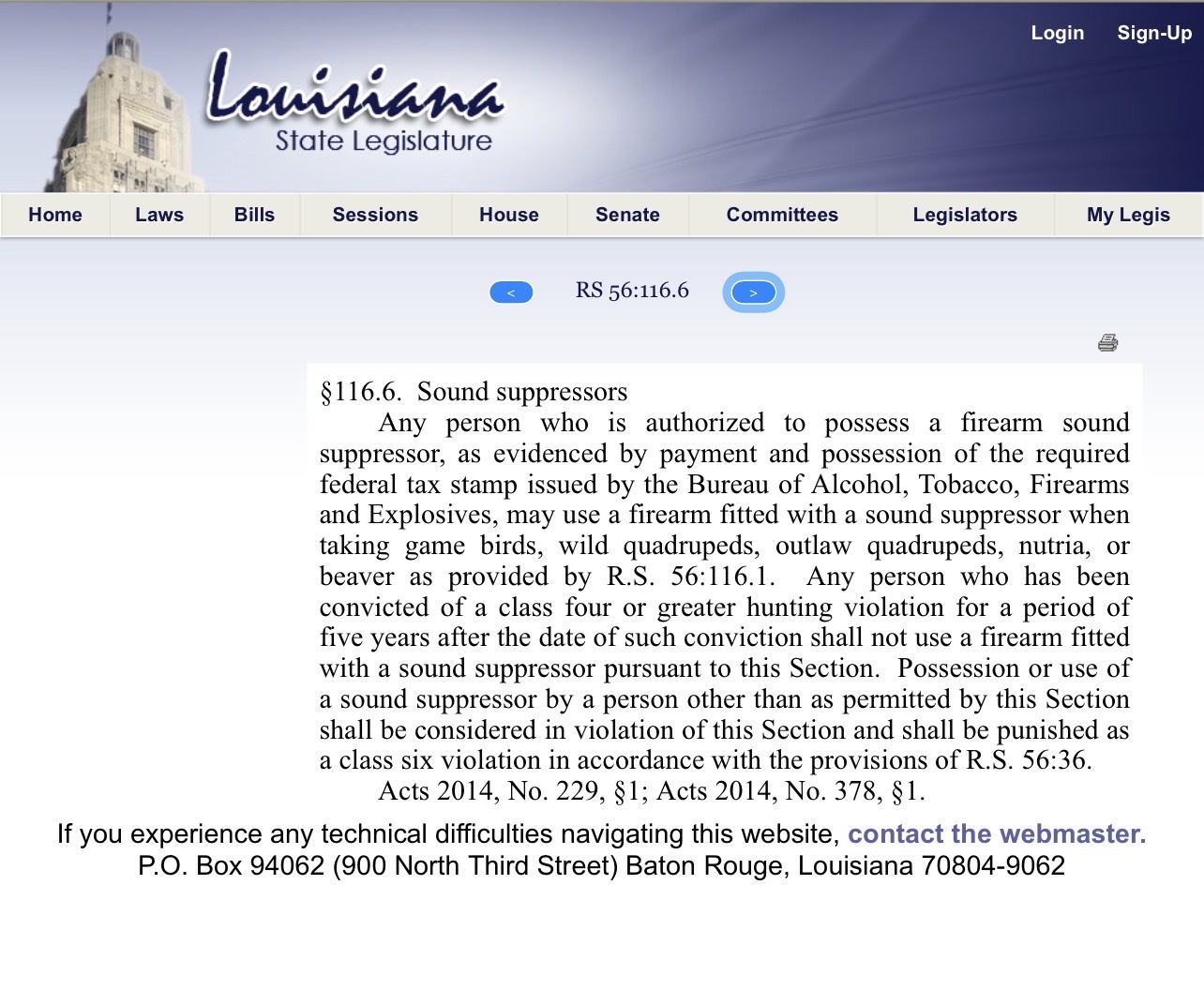
There is also a separate issue for hunters. Louisiana Revised Statute 56:116.6 still contains language requiring a federal tax stamp to use a suppressor while hunting.
ONE IMPORTANT WARNING
The ATF acknowledges that this is an enforcement policy, meaning future administrations or changes in federal law could reverse it.
The agency also warns that firearms left unregistered under the new policy would not automatically be grandfathered into legality if federal enforcement resumes.
APR•ST TAMMANY’S POSITION: LOUISIANA NEEDS TO FINISH THE JOB
APR•St Tammany proudly supports the Second Amendment and considers this announcement a tremendous victory for law abiding American gun owners.
But a federal victory should not leave Louisiana residents wondering whether exercising their rights could violate an outdated or unclear state statute.
The Louisiana’s Attorney General needs to clarify how the October 9 ATF decision affects existing Louisiana law.
We also believe our state legislators should review R.S. 40:1785 and R.S. 56:116.6 and make any necessary changes to ensure Louisiana law reflects the new federal landscape.
Local elected leaders should be involved in that conversation and encourage action in Baton Rouge.
Gun owners deserve clear laws, not legal uncertainty.
The federal government has taken a major step toward removing restrictions on law abiding firearm owners.
Now it is time for Louisiana’s elected officials to address the remaining questions.
APR•St Tammany is not a lawyer and nothing in this article is legal advice!
Photos & Records
Use the arrows to review supporting images for this story.