
August 3, 2026
This is a long article and we want to make it clear that we are not belittling this incident! This is a very sad situation.
Our hearts and prayers are with
Twin Falls.
TWIN FALLS, Idaho — A disturbing image captured during Saturday’s mass shooting near an Idaho restaurant is raising questions about whether increasingly automated vehicle technology could create additional dangers during an attempted escape.
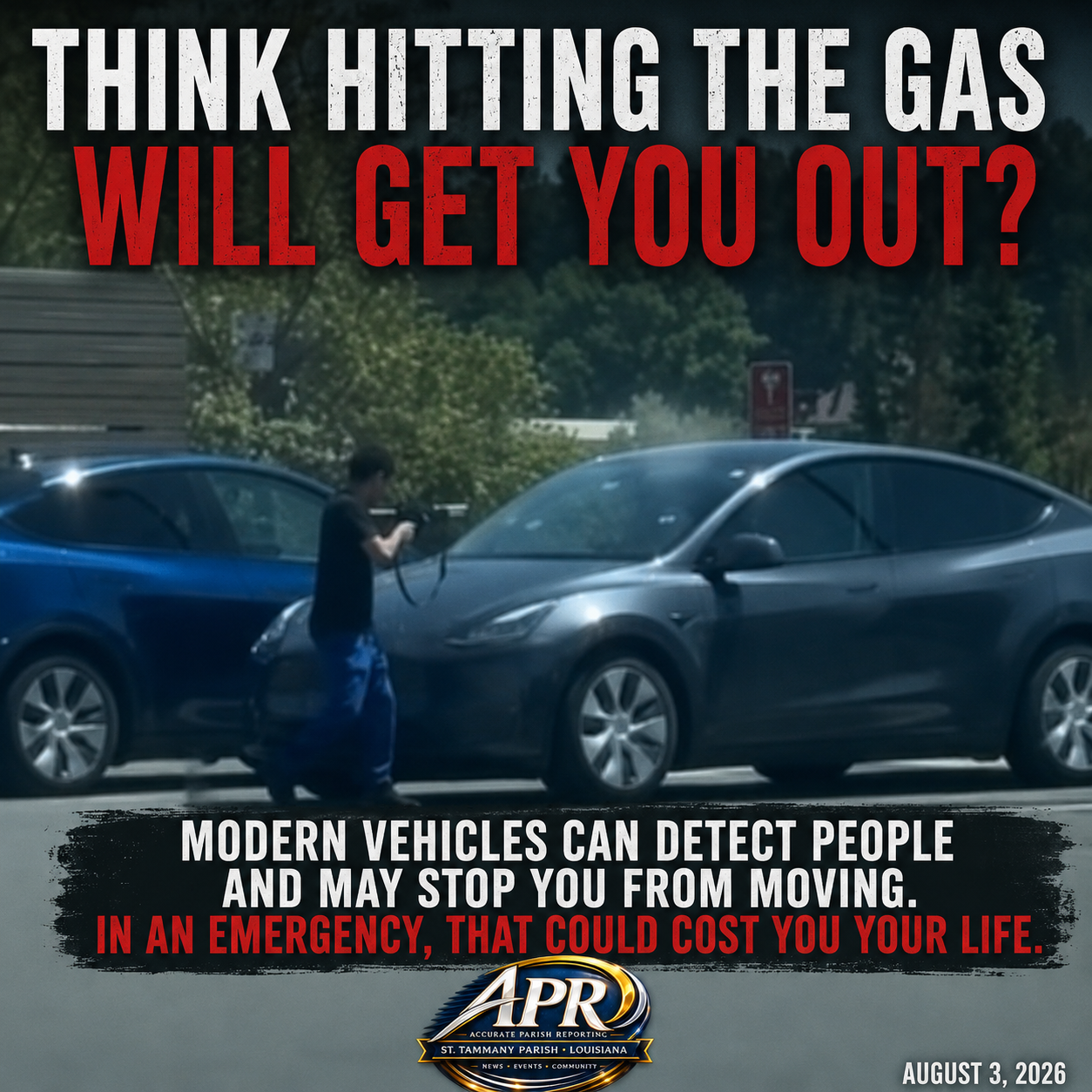
The image shows the gunman standing directly in front of a vehicle near a charging station during the August 1 attack.
Three victims were killed and seven others were injured before authorities said the 24-year-old gunman died from a self-inflicted gunshot wound. Police said an armed citizen and an off-duty state trooper returned fire, diverting the attacker and likely preventing additional deaths.
One of those wounded was Terry Dudley, a driver for North Star Taxi. His family and employer said Dudley was charging one of the company’s electric vehicles when he was shot twice in the back. Dudley survived but faces what his employer described as a long recovery.
Following the shooting, many people viewing the footage responded by saying they would have pressed the accelerator and driven away.
Modern vehicles, however, are no longer controlled entirely by the person behind the wheel.
Some vehicles already use cameras, sensors and computer software to detect pedestrians, vehicles and other obstacles. These systems can automatically apply the brakes, reduce motor torque or inhibit acceleration when the computer determines that an object is directly in the vehicle’s path.
One manufacturer describes its system as capable of limiting, delaying or inhibiting acceleration when the vehicle is stopped or traveling below 10 mph and detects an object immediately ahead. The system is designed to reduce the severity of an accidental collision, such as a driver mistakenly pressing the accelerator instead of the brake.
That technology can save lives in parking lots, driveways and crowded public areas.
But the Idaho shooting demonstrates why the same technology deserves scrutiny under circumstances that engineers may not have anticipated.
A pedestrian standing in front of a vehicle is normally something the computer should protect. During an active shooting, carjacking, kidnapping or violent assault, however, the person standing in front of the vehicle may be the threat the driver is desperately attempting to escape.
In those seconds, reduced acceleration or automatic braking could work against the person inside.
The vehicle involved in Saturday’s shooting was also reportedly connected to a charging station. An electric vehicle cannot ordinarily be driven away while the charging connector remains secured to the vehicle. The driver must first stop charging, release the connector and disconnect the cable before leaving.
That process may be reasonable during ordinary use, but every additional step becomes critical when an armed attacker is only feet away.
Federal regulators are also expanding the use of automatic safety technology. The National Highway Traffic Safety Administration has finalized a rule requiring automatic emergency braking and pedestrian-detection braking on new passenger vehicles. Those systems use cameras and other sensors to identify an imminent collision and automatically apply the brakes when the driver has not responded quickly enough.
Driver-monitoring cameras are also becoming more common. These systems analyze eye movement, head position, lane behavior and other indicators to detect distraction, drowsiness or sudden illness.
Congress has additionally directed federal regulators to develop requirements for technology capable of preventing impaired driving. NHTSA says possible approaches include camera-based driver monitoring and vehicle-performance data, although the agency reported in 2026 that existing systems had not yet demonstrated the accuracy and reliability needed to satisfy the federal mandate.
That creates another concern for emergency situations.
A person fleeing an attacker may be shaking, breathing rapidly, looking repeatedly in different directions and operating under extreme stress. Those behaviors could resemble distraction, illness or impairment to a computer system that does not understand the danger surrounding the vehicle.
APR•St Tammany recognizes that automatic braking, pedestrian detection and driver monitoring can prevent crashes and save lives.
The Twin Falls shooting nevertheless highlights a difficult question: What happens when the action a vehicle considers dangerous is the only action that may save its occupant?
Safety technology should protect drivers without trapping them during an emergency. Manufacturers and regulators should require immediate, simple and clearly identified emergency overrides for collision intervention, acceleration limits and charging locks.
A computer can detect an obstacle.
It cannot always understand why the driver needs to get away from it.
Our hearts go out to the victims of Twin Falls.